A Building Energy Rating (BER) certificate measures the energy efficiency of a building. A difference of just a few grades on a BER certificate can have a huge impact on a home's heating bill.
If you’ve been searching for a new home to buy or rent you may have noticed the colourful BER indicator displayed alongside property descriptions and wondered what it meant.
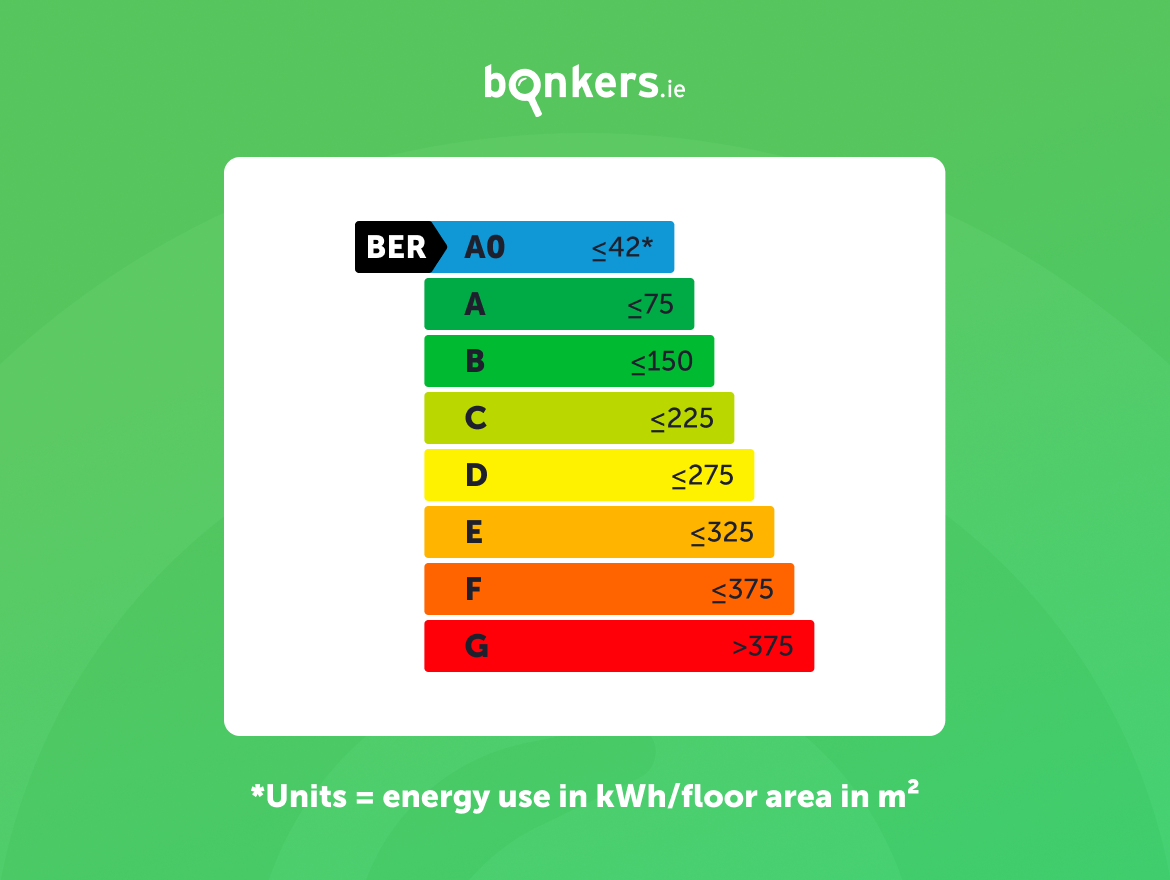
This is the Building Energy Rating, and it measures the energy efficiency of a property on a simple, colour-coded scale from A to G, with A-rated homes being the most energy efficient and G-rated homes the least.
Why is my home's BER important?
If you're selling or letting a property, you're legally obliged to provide a valid BER to prospective buyers and tenants. This also applies to property advertisements which must display the property's BER.
Equally, if you're buying or looking to rent a property, the seller or landlord is required to provide you with a valid rating.
The better the home's rating, the less money it will cost to heat, and vice versa.
Does my BER affect my bills?
Yes. A difference of just a few grades in your BER can have a substantial impact on your home's heating costs, so it's important to know how energy efficient your home is.
All homes built since 2020 will have an A rating, with some newer homes achieving the top A0 rating.
A0 is a new category for the most energy‑efficient buildings that do not use any fossil fuels but instead use a heat pump for heating and solar panels for water.
On the flip side, most homes built before 2000 will have a D rating or lower, unless they've been upgraded or retrofitted to improve their energy efficiency.
How can I improve my BER?
A BER is an indication of a home’s energy efficiency. It takes into account energy used for heat, light, pumps and fans. It does not include energy used for items such as washing machines, dishwashers, cookers and fridges, although most home appliances now also come with their own separate energy rating.
If a home has a particularly low energy rating, C or worse for example, homeowners can choose to retrofit their property. Oftentimes simple retrofitting measures — also called a shallow retrofit — such as improving existing insulation and installing new windows can make the world of difference in the short term.
More extensive measures, called a deep retrofit, can also be taken such as installing solar panels and heat controls. And the good news is there are grants available for all of the above.
There are a number of finance options available for those interested in retrofitting their homes.
Houses built before 2011 can apply for a range of home energy grants from the SEAI (Sustainable Energy Authority of Ireland) and can be used to invest in energy efficiency improvements including:
- Internal/external wall insulation
- Windows
- Heat pump system
- Heating controls
- Solar water heating
- Solar electricity
Whether you're selling your house or planning to stay put, taking steps to improve your BER makes sense. It could potentially save you thousands on your heating bill and if your house is on the market, a higher rating can be a critical selling point for savvy buyers.
More information on the Building Energy Rating can be found on the Sustainable Energy Authority of Ireland website.
What is a valid rating and how do I get one?
A BER is valid for 10 years as long as no significant structural changes are made to the property that might affect the rating. A provisional BER can be made on the basis of a property's plans but this is only valid for two years.
The BER assessment must be carried out by a certified assessor. There’s no fixed cost for an assessment, so be sure to get a number of different quotes before you hire a BER assessor.
You can find out more about how to get a BER certificate here
Save on your energy bills
Improving your BER can help lower your energy bills — but it can also involve a substantial amount of investment.
If you’re looking for a quicker way to save money on your household energy bills, consider switching energy supplier.
It’s quick and easy to compare gas and electricity suppliers on bonkers.ie. You can find the cheapest energy deals on the market from all of Ireland’s suppliers in just a few clicks and save hundreds annually.
You can also easily reduce both your energy consumption and your carbon footprint with our list of 16 ways to use less electricity and save money.